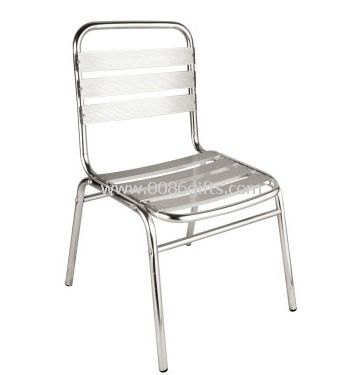
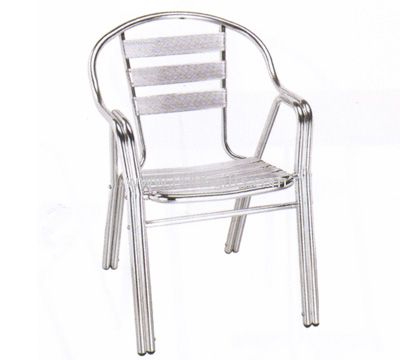
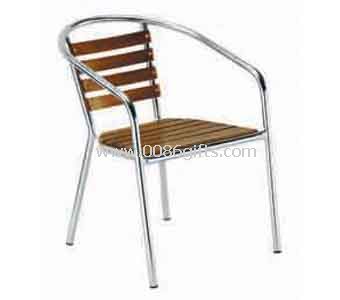
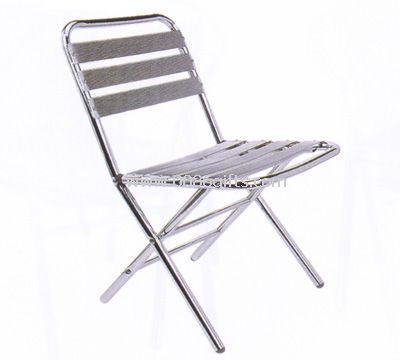
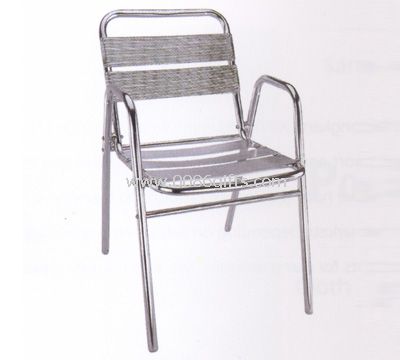
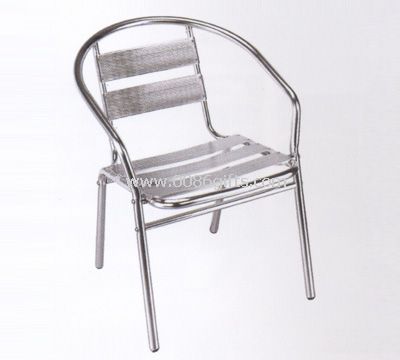
Aluminum chair
Strength without weight is the defining promise of the aluminum chair family, a leaf category under the chairs branch of the home-decoration assortment. It serves furniture wholesalers, outdoor-living retailers, and project buyers such as hotel and restaurant suppliers who need seating that stacks, survives weather, and still looks contemporary.
Frames are built from extruded or bent aluminum tubing, often with welded joints finished by polishing, anodizing, or powder coating in assorted colors. Seat surfaces vary widely: woven textile, fabric sling, wood-look panels, and rattan pairings all appear across the range, letting a single material family cover balcony, dining, and lounge placements.
Because aluminum resists rust, the chairs suit gardens, poolside decks, cafés with street seating, and coastal properties where steel furniture corrodes. Stackable geometries simplify storage for banquet halls and rental companies, while lightweight construction makes the pieces friendly to e-commerce fulfillment, where every kilogram affects freight.
Procurement conversations usually revolve around load-bearing confidence, finish durability, and flat-pack versus fully assembled configuration. Factories in this category commonly offer OEM dimension changes, color matching to fabric swatches, and mixed-container loading that combines chairs with tables and loungers from sister lines.
Packaging for export relies on foam corners, kraft wrapping, and reinforced cartons, with assembly hardware bagged and instructions inserted for retail-ready presentation. Consistency across batch production — matching tube gauge, weld quality, and coating thickness — is what separates a reorder-worthy supplier from an average one.
For importers building an outdoor or contract-furniture range, this category delivers a dependable anchor: modern styling, low maintenance, and a price band that leaves room for healthy retail markup across both consumer and hospitality channels.
Sourcing checks worth completing before bulk: weld integrity under load testing, coating adhesion at bend points, and hardware corrosion after salt-spray exposure for coastal programs. Reputable factories document these tests willingly, and first-article inspection of each colorway protects brand consistency when production moves between lines.
6 products